×

The Standard e-Paper
Home To Bold Columnists





Audio By Vocalize
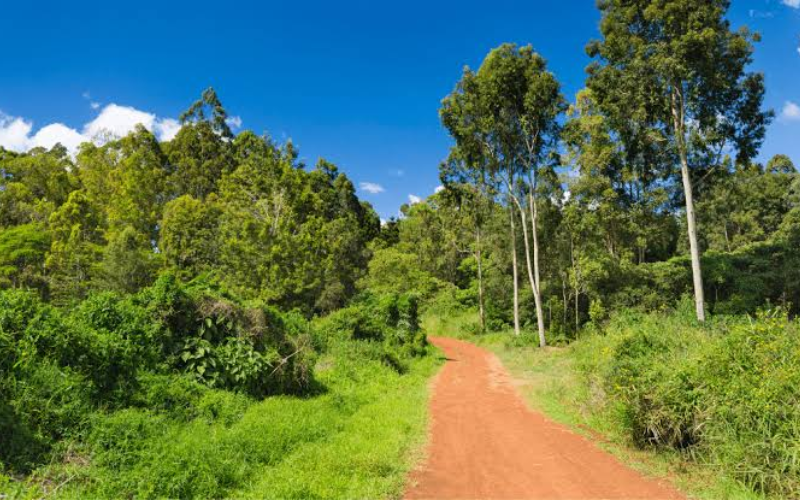
From Karura to Ngare Ndare and the Aberdares, each journey reveals how Kenya's forests quietly teach patience, courage and perspective to those willing to slow down and listen.
Three forests, three guides, three lessons, yet every trail seemed to whisper the same truth: forests are not simply places we visit, they are living companions that patiently shape those willing to walk slowly enough to hear them.
As I stepped beneath three of Kenya's forest canopies, something unexpected happened. As the city fell off my shoulders, history whispered through ancient trees, and every trail seemed to tell a story, if only you're willing to slow down and listen. Experience over the years doing my travel escapades has taught me this precious lesson.
I had barely walked into Karura Forest when the city began to fade, first the noise, then the horns, then even the urge to check my phone. Sunlight filtered through green canopies as birds called out and disappeared above.
"People arrive carrying the city on their shoulders, but leave lighter," my guide, Josiah Mwaniki, said. His words stayed with me.
I have since visited Karura, Ngare Ndare and the Aberdares, different forests, but all asking the same thing: slow down and listen. In Karura, visitors instinctively lower their voices and slow their pace, and even the air feels different.
"Listen," Josiah whispered. At first, there was silence. Then the forest revealed itself through rustling leaves, flowing water, and distant birds.
"The forest is always talking," he said. "We are just too busy to hear it." Karura, I realised, simply teaches you to slow down.
If Karura teaches you to listen, Ngare Ndare asks a different question: "How much do you trust your next step?" The answer begins high above the forest floor.
Standing at the entrance of the suspended canopy walkway, I instinctively tightened my grip on the railing. Below me stretched an ancient indigenous forest, its towering trees hiding whatever mysteries lay beneath their leafy crowns. The bridge swayed gently with every step, just enough to remind me that this was no ordinary walk.
"Don't look down first, look ahead, the forest has a way of rewarding courage," my guide, Kasaine Selempo laughed, noticing my hesitation.
I smiled, took a deep breath and stepped forward. Halfway across, I stopped, not because of fear, but because of wonder.
The canopy offered a view that the forest floor could never reveal. Birds glided effortlessly beneath us, while sunlight pierced through openings in the leaves, painting shifting patterns on branches that had stood for decades. Somewhere in the distance came the unmistakable rumble of elephants moving through the forest.
It struck me that forests reveal themselves differently depending on where you stand. From the ground, Ngare Ndare feels protective, wrapping visitors beneath its cool green canopy. From above, it unfolds like a living cathedral, reminding you how small you really are.
Kasaine pointed towards the thick woodland beyond. "Those elephants know these paths better than we do," he said, adding, "We've built bridges for visitors. They have travelled these forests for generations."
The walk ended far too soon, but the lesson lingered. Sometimes, the greatest reward is waiting just beyond the step you almost didn't take.
The Aberdares announce themselves before you see them with cool mountain air, drifting mist, and then the roar of falling water. At the base of a waterfall, water plunged over ancient cliffs into forests that feed rivers across Kenya, a reminder that life downstream begins quietly here.
"Every river has a birthplace," my ranger guide, Stephen Mutiso, said. "Protect the forest, and you protect the water."
The Aberdares have sheltered wildlife and shaped conservation efforts for generations, standing as one of Kenya's vital water towers.
Tucked within these misty highlands is one of history's most remarkable stories. It was here that Princess Elizabeth arrived on holiday in 1952. Before she descended from the forested slopes, news reached her that King George VI had died. She left Kenya not as a princess, but as Queen Elizabeth II. History changed beneath these trees.
Today, visitors still come seeking waterfalls, wildlife and mountain air, but the Aberdares offer something even greater: perspective.
Watching torrents of water carve their way through ancient rock, I realised that forests measure time differently from us. They have watched kingdoms rise, generations come and go, and rivers patiently shape the landscape.
As we prepared to leave, my ranger looked back towards the forest and quietly said, "People think they're visiting the Aberdares, but I have always believed rather, it is the forest is the one watching us," he said grinning. For a moment, I almost believed him.
Subscribe to our newsletter and stay updated on the latest developments and special offers!